


Two minutes into cardiac arrest — when the heart stops pumping and blood ceases to flow to the body’s organs — brain cells begin to die. It only takes another five minutes for irreversible neurological damage to occur.
When every second counts, early intervention is key to survival.
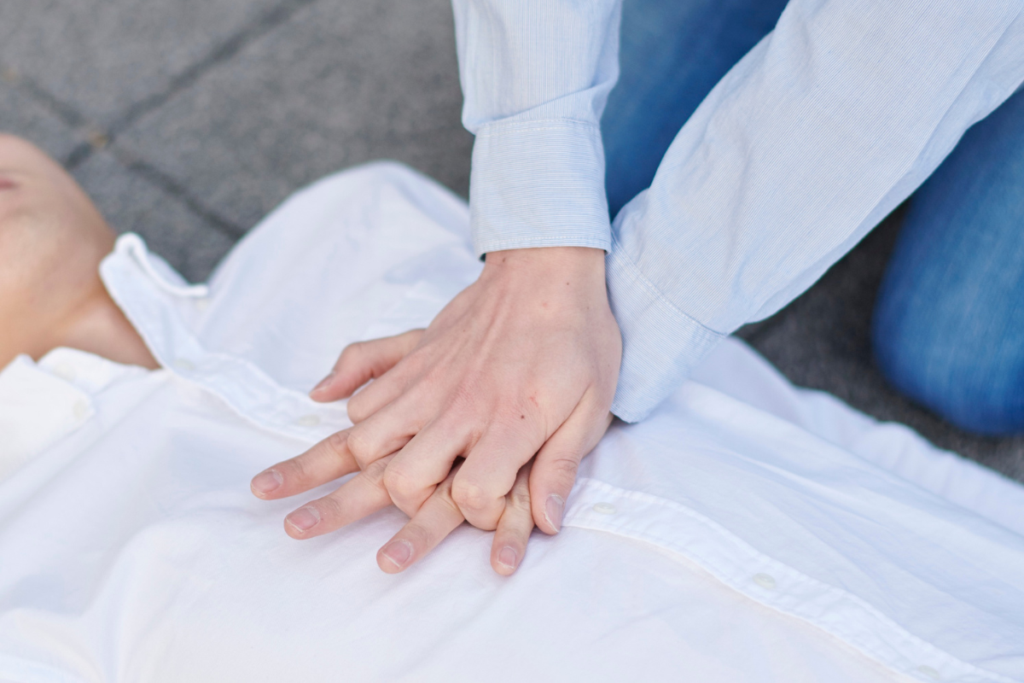
A study by University of Florida Health researchers published recently in the Journal of Clinical Medicine shows that following the local activation of PulsePoint, an app that alerts CPR-trained individuals about a nearby cardiac event, rates of bystander CPR performed outside a hospital setting significantly increased in Alachua County.
The findings, believed to be one of the first scientific studies on the impact of a community CPR app in the United States, showcase how community-centered measures can save lives.
“We have always known anecdotally that PulsePoint has made an impact on the community, but this is an important way of showing the causality between the app’s use, instances of bystander CPR and scientifically reviewing the impact it’s had on patient outcomes,” said Torben Becker, M.D., Ph.D., M.B.A., senior study author and an associate professor in the UF College of Medicine’s Department of Emergency Medicine.
In 2018, UF Health collaborated with Alachua County emergency services to implement PulsePoint in the North Central Florida community, home to nearly 300,000 residents. The 911-connected app, available in more than 5,500 communities nationwide, immediately informs users about emergencies occurring in their vicinity and requests their help when CPR is needed.
Since PulsePoint has been established, the bystander CPR rate before EMS arrives in Alachua County has increased by 33%.
This is crucial, Becker said, because CPR must happen as soon as possible following cardiac arrest for the best chance of survival and quality of life, and for health teams to use the most effective treatment tools available.
“You need to have that first link in the chain of survival for top-notch methods and tools to work,” said Becker, who is also the chief of service of emergency medicine and vice chair of critical care medicine at UF Health. “This improves survival and allows people to use the most important medical interventions available.”
Now that tools like PulsePoint are proven to boost the number of times CPR is administered, Becker said, the next step UF Health and the community can take is to increase its use.
“A lot of responders in the study were off-duty health care professionals,” he said. “By training more people outside of health care in CPR, we can leverage tools like PulsePoint to their full potential.”
While Becker said it’s great to have the data now available to showcase PulsePoint’s impact, the true meaning of its value comes from the lives saved.
“We’re helping the community at large, but each success means someone can spend another holiday with their family, can watch their grandchildren grow up,” Becker said.
Suggested Articles
No related articles found.