


The descendants of Holocaust survivors shared stories of their family members in an event commemorating Yom HaShoah, or Holocaust Remembrance Day.
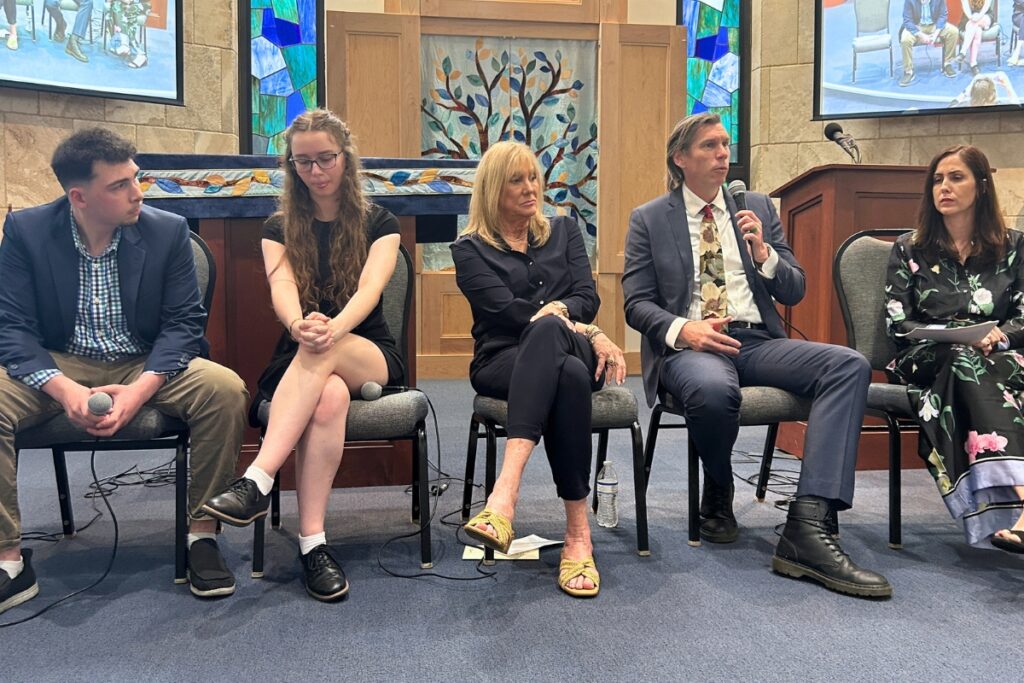
Scores gathered at Congregation B’nai Israel in Gainesville on Sunday to hear from a panel, in which the children, grandchildren, and even great-grandchildren of Holocaust survivors reflected on family experiences.
“I’d say one of the most difficult things about everything would be holding on to hope,” said Mason Steinberg, a Gainesville native and a junior at the University of Florida. when talking about his great-grandparents’ experiences. “The mental moves that must have had to go through …to just keep going, I think, is the most challenging thing.”
The Nazis and their allies and collaborators murdered six million Jews during the period from 1933 to 1945. Millions of non-Jewish people were also killed in this bloodbath. Yom HaShoah observations began in 1951 with a proclamation by the Israeli Knesset or Parliament and spread to Jewish communities in the United States.
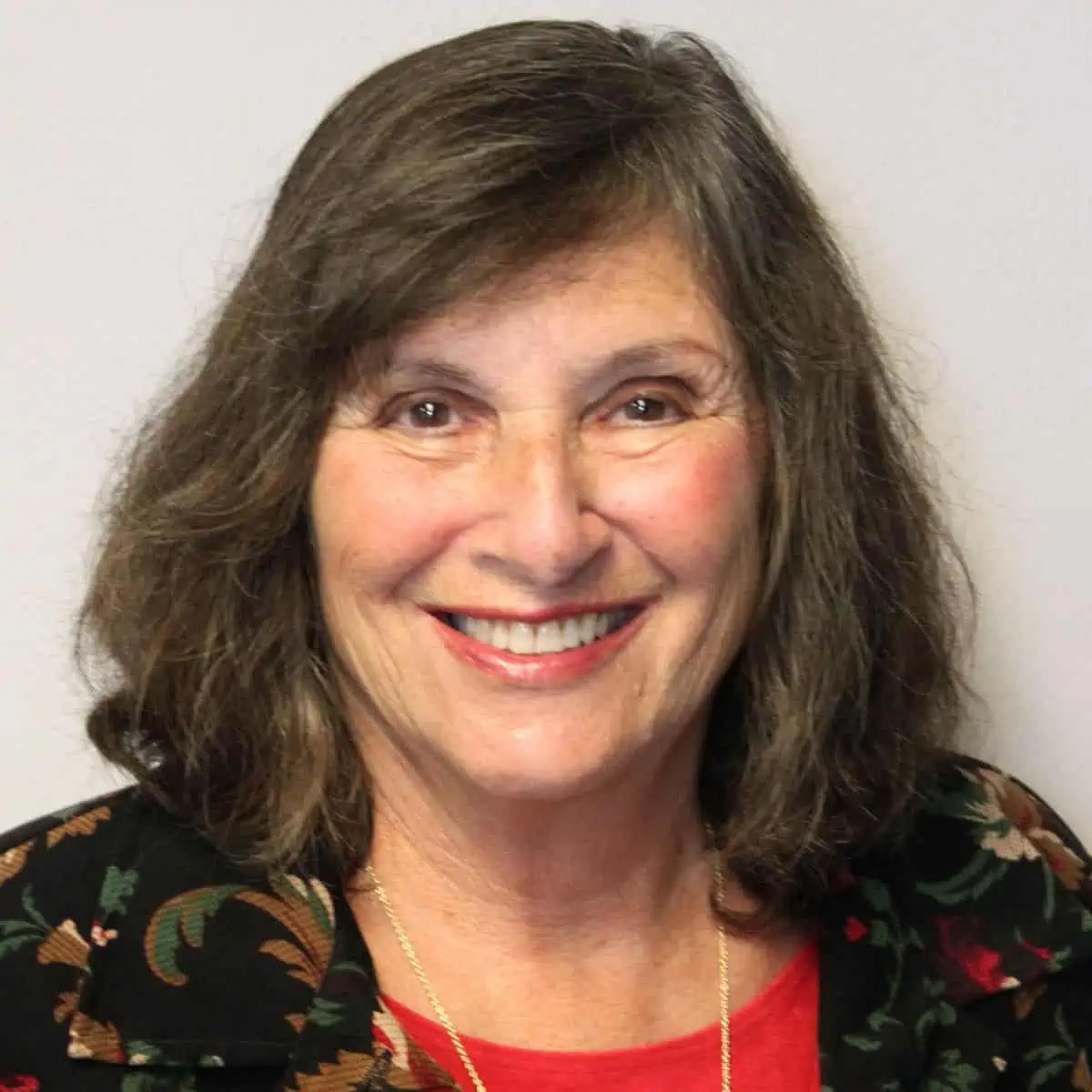
Steinberg was one of three panelists to share their stories. Helen Frankel is the eldest daughter of Polish Holocaust survivors, who has spent the last 20 years fostering education about the Holocaust in Gainesville and South Florida.
Daliah Halpern, 17, is the granddaughter of Holocaust survivors. She is a Cuban-Jewish American who is in her freshman year at UF. Jenna Price, who moderated the program, is the Storyteller Bureau Manager for Teach the Shoah.
Abe Goldman, a retired UF professor whose parents were both Holocaust survivors, had been scheduled to begin the program, but was absent for health reasons.
But in an earlier appearance on The Ilene Silverman Show, Goldman said while past commemorative events had focused on actual survivors, the passage of time means there are fewer still alive. “This year, we decided we would call on our own resources, with the children and grandchildren of survivors,” Goldman said.
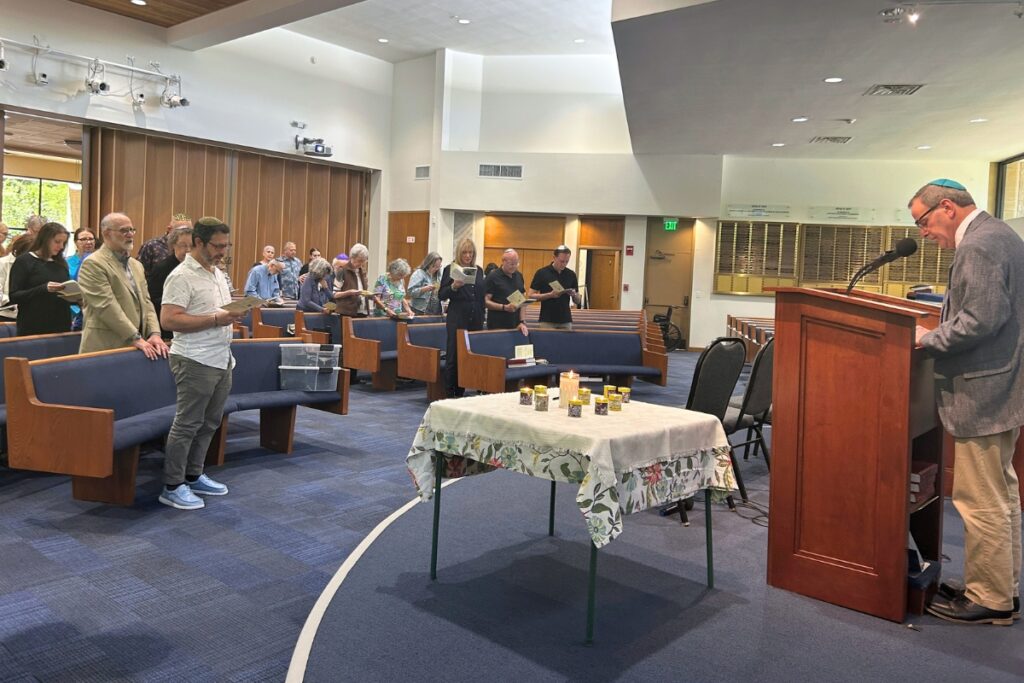
Interim Rabbi Cy Stanway of Temple Shir Shalom started the observation with a recitation of the Mourner’s Kaddish, the Jewish prayer for the dead.
Frankel, who is working on a memoir about her parents’ lives, recalled that when she was growing up in New Jersey, no one talked about Holocaust survivors. Instead, people like her parents were “simply known as Jewish refugees from the war.” That was the terminology used in the 1950s and 1960s.
Ongoing anti-Semitism was also a focus of the discussion. Halpern recalled an incident during a high school field trip when another student handed her a piece of paper with a drawing of a Swastika. She told her teacher but got little reaction. “It wasn’t taken very seriously, which I think hurt more than the fact that it happened,” she said.
Steinberg spoke about two middle school encounters in Gainesville, one when he was called a “dirty Jew,” and another during a civics class when another student looked at him and gave the Nazi salute. Steinberg took his case to the Alachua County School Board when he made a plea for more education about the Holocaust in the schools.
Jon Rehm, the K-12 social studies curriculum coordinator for Alachua County schools, shared with the audience his efforts to coordinate teacher training and Holocaust education programs in the schools.
The event concluded with a recitation of “Never Again,” a pledge often associated with Holocaust remembrance and genocide prevention.
Suggested Articles
No related articles found.
Thanks for the article. We must never forget!